Crown Cleaning
Removal of dead, dying, diseased, and crossing branches from the crown. The most common form of pruning — improves tree health and reduces hazard risk.
ISA-certified arborists performing expert tree trimming and pruning across Northern Virginia — following ANSI A300 industry standards on every single job.
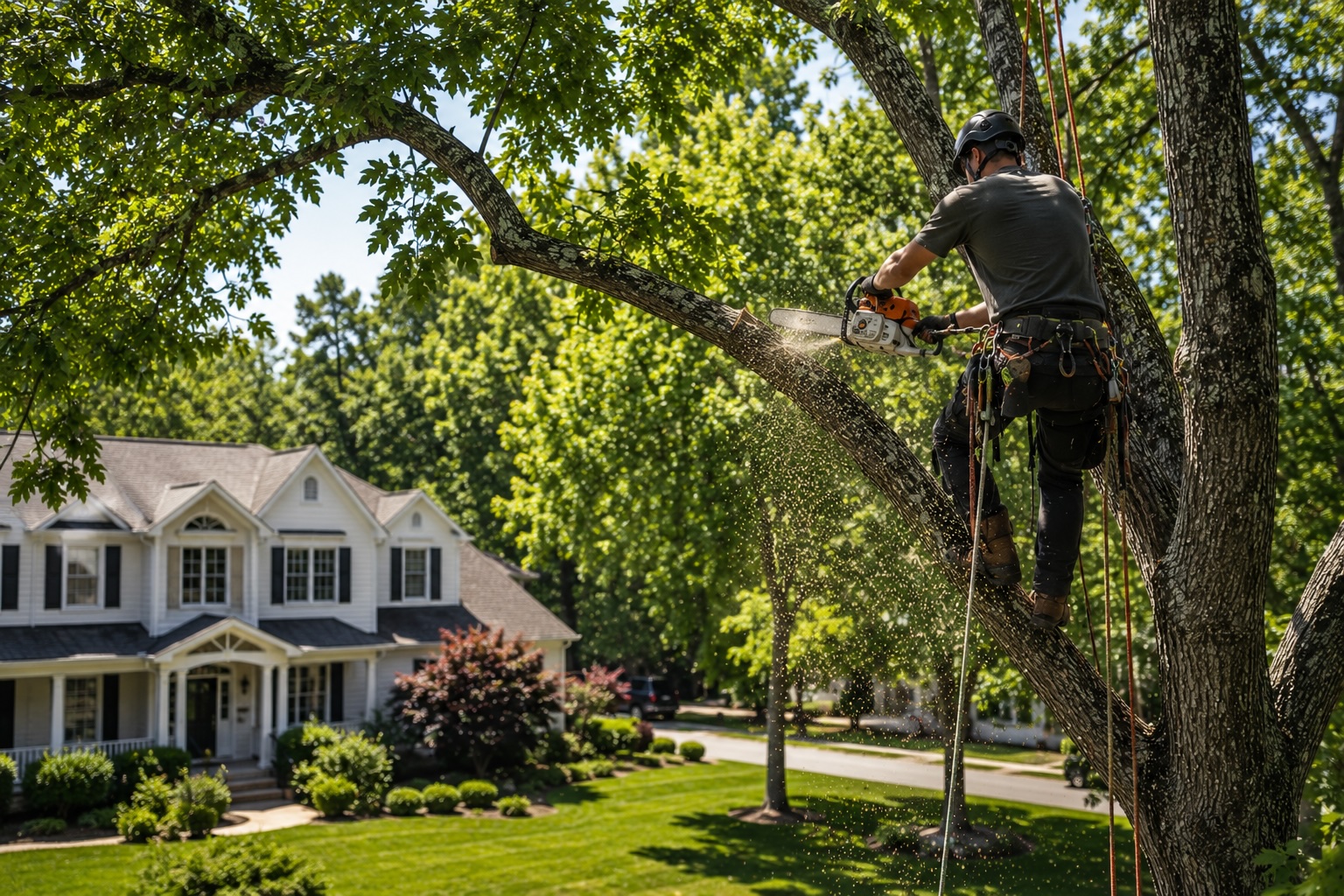
Tree trimming isn't just about aesthetics — improper cuts can permanently damage or kill a tree. At NoVA Tree Trimming, every pruning cut we make follows the American National Standards Institute A300 pruning guidelines, the industry's gold standard for tree care.
Our ISA-certified arborists assess each tree before any cuts are made. We identify the primary objective — whether that's clearing a hazard, improving structure, raising a canopy, or managing long-term growth — and prune with that goal in mind. Every decision is intentional.
Every tree trimming job with Nova includes a pre-work walkthrough with your crew lead, all cuts following ANSI A300 standards, complete cleanup and removal of all debris, and a follow-up check to make sure you're satisfied. We don't consider a job done until your property looks better than when we arrived.
We visit your property, evaluate each tree, and provide a written estimate. No charge, no obligation.
Our certified arborist identifies the pruning objectives and determines the right approach for each tree's species and condition.
Our crew performs all cuts to ANSI A300 standards — clean, intentional, and at the correct collar point to promote healing.
All debris is hauled away. We walk the property with you before we leave to confirm you're satisfied.
Different trees and goals call for different pruning approaches. Our arborists will recommend the right method during your free estimate.
Removal of dead, dying, diseased, and crossing branches from the crown. The most common form of pruning — improves tree health and reduces hazard risk.
Removal of lower branches to provide clearance for buildings, vehicles, pedestrians, and sight lines. Common in urban Northern Virginia neighborhoods.
Reduces the overall height or spread of a tree by pruning back to lateral branches. Preferred over topping — preserves the tree's natural form and long-term health.
Early-stage pruning to establish good branch architecture in young trees. Prevents structural defects before they develop into expensive hazards later.
Selective removal of branches throughout the crown to increase light penetration and air circulation. Reduces wind resistance and improves overall tree health.
Improves structure and appearance of trees that have been previously topped, damaged by storms, or improperly pruned. A multi-year process done right.
Timing varies by species, but here's a general guide for the Northern Virginia climate.
Feb–Mar. Trees are dormant, insects inactive, wounds heal quickly in spring. Ideal for most species.
Apr–May. Fine for light pruning. Avoid heavy cuts on oaks during peak growing season.
Jun–Aug. Avoid major pruning. Summer heat stresses trees. Emergency work only.
Sep–Nov. Light trimming is fine. Avoid cuts that may not heal before winter frost.
Note: dead, diseased, or hazardous branches should be removed any time of year, regardless of season.
Northern Virginia has a rich diversity of native and ornamental trees. Each species has specific pruning needs — our arborists are trained on all of them.
NoVA's most common large shade tree. Must avoid pruning March–June (oak wilt risk). Late winter is ideal.
Virginia's state tree. Fast-growing with brittle wood — regular pruning prevents storm damage and branch failure.
Hardy native evergreen. Prune in late winter. Avoid cutting into old wood — won't regenerate growth.
Virginia's state flower/tree. Prune after blooming in spring. Susceptible to fungal issues — clean tools required.
Prune in late winter when dormant. Avoid late spring pruning which triggers heavy sap flow.
Both susceptible to serious disease (Dutch elm disease, emerald ash borer). Regular health monitoring essential.
Our ISA-certified arborists can identify your trees during the free estimate visit and advise the correct pruning approach, timing, and any disease or pest risks specific to your species. This is part of every free consultation at no charge.
Free estimate · Written proposal · No obligation
Tell us about your trees and we'll follow up within one business day with a free written estimate. No pressure, no obligation.
Tree Trimming Estimate Request
Usually responded to within 24 hours · No obligation
We'll follow up within one business day. Or call us now at (571) 555-0190.