Canopy Condition
Leaf size, color, density, and timing of leaf-out or drop. A thinning or discolored canopy is often the first visible sign of disease, pest pressure, or root stress.
Our ISA-certified arborists inspect your trees from canopy to roots — diagnosing disease, pest infestations, and structural defects before they become costly emergencies. You receive a written findings report with a clear treatment plan.
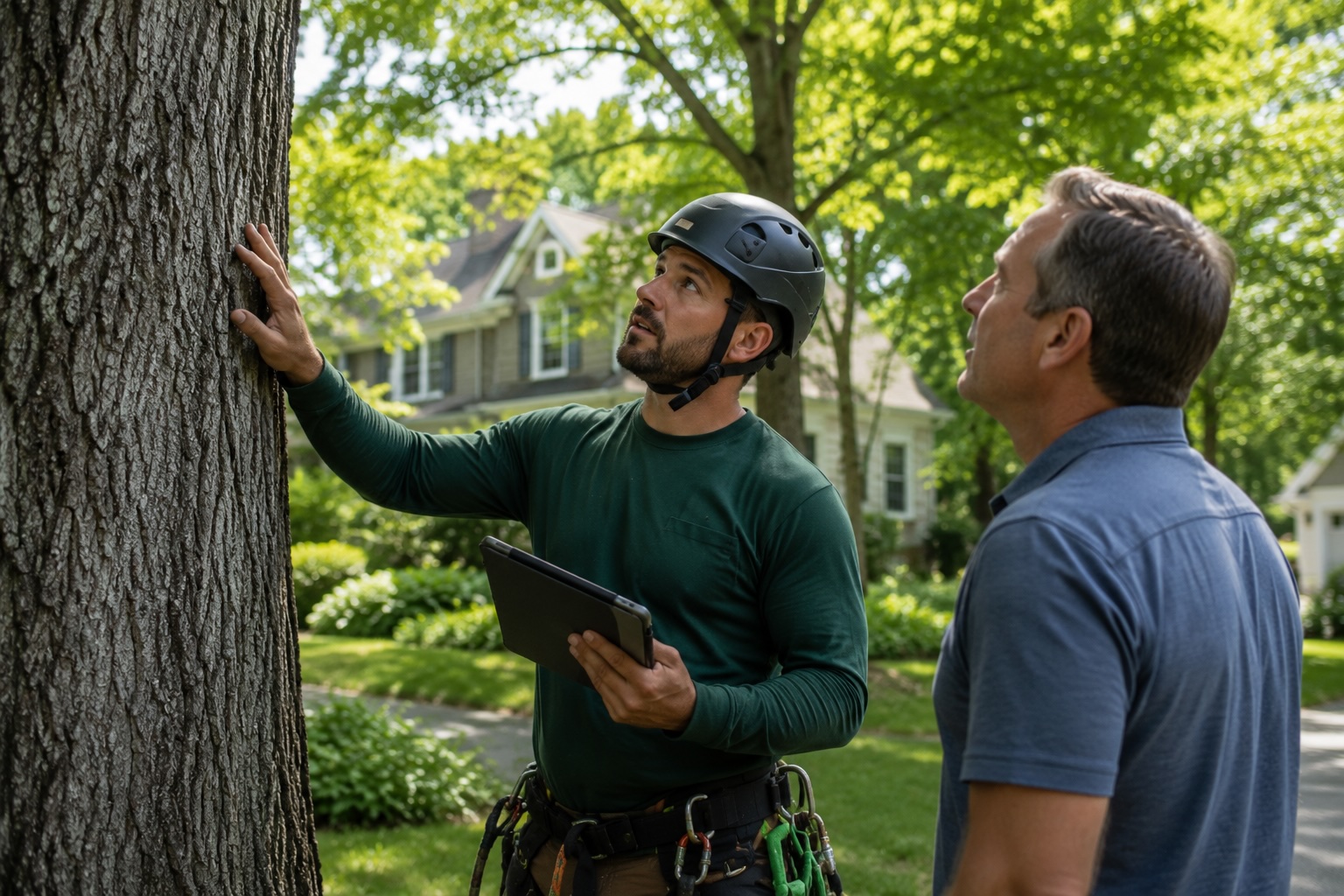
Most tree problems are visible long before they become dangerous — if you know what to look for. A professional tree health assessment gives you that knowledge, delivered by an ISA-certified arborist who has been trained to spot early indicators of disease, pest damage, structural failure, and root stress that homeowners routinely miss.
Northern Virginia's tree canopy faces pressure from all sides: emerald ash borer, oak wilt, fire blight, root compaction from construction, and storm damage that weakens structure invisibly. An annual or biennial assessment gives you peace of mind and — more importantly — lets you address problems when they're still inexpensive to fix.
Our assessments cover the full tree: canopy condition, branch structure, trunk integrity, bark health, root collar and surface roots, and any visible signs of disease or pest activity. We also consider site conditions — soil, drainage, nearby construction, and proximity to structures. You receive a written summary of findings and a prioritized list of recommended actions.
An ISA-certified arborist visits your property and performs a systematic inspection of each tree — canopy, trunk, roots, and surrounding site conditions.
We identify any disease, pest, or structural issues found, assess their severity, and evaluate the risk each presents to your property and the tree's long-term survival.
You receive a clear written summary of what we found, what it means, and what — if anything — we recommend doing about it. No jargon, no pressure.
If treatment is recommended, we provide a written estimate for any pruning, removal, or treatment work. You choose what to do next — there's no obligation.
A thorough tree health assessment covers six key areas. Problems in any one of them can affect the tree's safety and longevity.
Leaf size, color, density, and timing of leaf-out or drop. A thinning or discolored canopy is often the first visible sign of disease, pest pressure, or root stress.
Weak V-shaped crotches, co-dominant stems, crossing branches, dead wood, and past storm damage. Structural defects cause the majority of unexpected branch failures.
Cracks, cavities, wounds, fungal conks, oozing, and bark abnormalities. The trunk is the tree's structural core — damage here can indicate advanced internal decay.
Exit holes, frass, galleries, cankers, galls, rust, powdery mildew, and other indicators of active insect or disease pressure. Caught early, most are treatable.
Girdling roots, buried root collars, soil compaction, and proximity of hard surfaces. Root problems are common in urban NoVA settings and often go unnoticed until trees decline rapidly.
Drainage, soil compaction, grade changes, construction impact, and proximity to structures. Trees don't exist in isolation — site conditions drive long-term health.
Northern Virginia's climate and urban conditions create specific threats our arborists are trained to identify and address.
Kills ash trees within 3–5 years of infestation. Signs: D-shaped exit holes, S-shaped galleries under bark, canopy dieback. Treatable if caught early.
Fungal disease affecting red and white oaks. Red oaks can die in weeks. Spread through root grafts and sap beetles. Avoid pruning oaks March–June.
Bacterial disease common in flowering trees (dogwood, crabapple, pear). Causes blackened, "shepherd's crook" branch tips. Prunable when caught early.
Roots that circle and compress the trunk — often from nursery containers. Causes gradual decline that mimics drought stress. Common in suburban plantings.
Fungal decay inside trunks and branches, often invisible from the outside. Fungal conks (mushrooms) on bark are a late-stage indicator. Risk of sudden failure.
Soil compaction, grade changes, and root severance from nearby projects can cause trees to decline 3–7 years after construction ends — by which point they're often unsavable.
After every assessment, you receive a clear written findings report — not a verbal summary you might forget. Our reports include:
You own this report. Use it to plan your tree care, share it with your insurance company, or get a second opinion — no strings attached.
Free assessment with every estimate · Written report included · No obligation
Tell us about your trees and we'll schedule an on-site visit with one of our ISA-certified arborists. Free as part of any estimate — or as a standalone inspection.
Tree Health Assessment Request
Usually responded to within 24 hours · No obligation
We'll follow up within one business day to schedule your assessment. Or call us now at (571) 555-0190.